We have been providing excellent customer service for over 19 years and you are the reason we are still in business!Please call ahead and come by to visit us at one of our convenient locations in Durham, Hillsborough, or Roxboro! You are our top priority!
"It's not finding the right car what really matters anymore, it's finding the right Dealer". Welcome to CBS Quality Cars Mitsubishi
Showing posts with label used cars raleigh. Show all posts
Showing posts with label used cars raleigh. Show all posts
Another awesome announcement from the Google I/O Developers Conference yesterday was the ability to attach and send money via Gmail using Google Wallet.
Look for this feature to be introduced to all users over the age of 18 during the next few months. This may be met with some initial skepticism from some users but this has the makings for becoming a major force in the online payment ecosystem. Security and trust will obviously be at the core of any debate. Watch this develop quickly as individuals and business explore new opportunities.
Imagine being able to take deposits for a vehicle via email. That's disruptive.
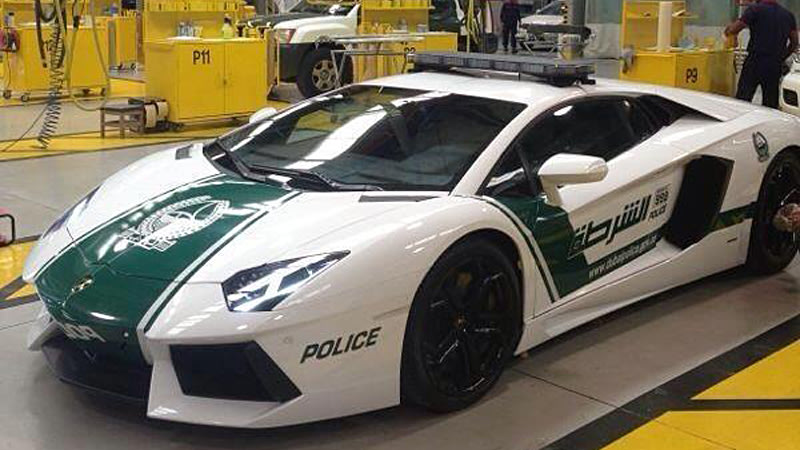
Dubai remains a city known for its wealth; built off the back of the oil industry, it now flourishes in tourism, real estate, and financial services. All that cash floating around evidently means one thing: lawbreakers drive highly expensive, fast cars. So, in response, the Dubai Police Department added an even faster car to its fleet – a 700-hp Lamborghini Aventador.
News surfaced of the acquirement on Twitter, with tweets stating “Only in Dubai” and “Officer, please cuff me in the Aventador and throw away the keys.” Additional sports cars are set to join the fleet too, with machines being designed according to police specifications in an effort to “facilitate policing on highways.”
Here in the U.S., we now focus on fuel efficiency from our cop cars rather than brute strength; philosophies between the two countries couldn’t differ more wildly. A recent study of several Ontario, Canada based police departments found the “average police car spends two-thirds of a 10-hour shift idling.” That translates to more than six gallons of fuel wasted over two shifts each day. Imagine how much fuel the Aventador will burn. Dubai has been burning through oil quickly enough as it is.
No word on which lucky Dubai cop gets to pilot the beastly machine, nor if they require special driver training. One thing's for sure, if we introduced a 217 mph Lamborghini into the U.S. police fleets, applications to become a cop would be at an all-time high.
The new auto safety app can tell you about car crash test ratings and recalls.(Photo: Mark Humphrey, AP)
Federal regulators released a mobile app Thursday with car safety information including vehicle safety ratings, searchable recalls and complaints and help with child seat installation.
The National Highway Traffic Safety Administration's iOS SaferCar app for iPhones and the iPod Touch will also let users file a vehicle safety complaint and subscribe to automatic notices about vehicle recalls. It also provides directions to the nearest child seat installation location.
"Timely, accurate, and accessible safety data is the lifeblood of our agency's work," said NHTSA chief David Strickland. "The new SaferCar app literally puts the latest in vehicle safety information directly in the hands of consumers so they can make the appropriate purchasing and other decisions for themselves and their families."
The announcement is the first phase for the SaferCar app, which can be downloaded from Apple's iTunes Store. The agency is still working on an Android version of the app. Earlier this year, NHTSA updated its www.SaferCar.gov website to allow consumers to quickly locate information on safety defect investigations, complaints and vehicle recalls.
The app launch coincides with the release of NHTSA's Application Programming Interface (API), which will provide software developers with better access to safety data for analysis and integration into consumer-friendly web and mobile apps.
NHTSA also plans to release an online course to teach developers how to use the APIs.
Volkswagen says it plans to unveil its 261-miles-per-gallon XL1 plug-in hybrid, a two-seat sports machine that it will begin offering for sale this year, at the Geneva auto show on March 5.
The automaker, since at least 2002, has been experimenting with the idea of a vehicle capable of using only one liter or less of fuel to travel 100 kilometers. That would be the fuel economy equivalent of about 235 m.p.g., the company said; in tests, the XL1 has managed to achieve even better numbers than the original goals.
“The 261 m.p.g. fuel consumption figure is a record that has not been achieved by any other vehicle to date,” the company announced in press materials on Thursday, “showing that Volkswagen is redefining what is technically feasible in the automotive industry.”
Concept versions of the car, called the L1, have been shown in the last decade as a tandem two-seater. With the XL1, a concept version of which appeared in 2011, the cockpit has been widened to allow driver and passenger to sit more or less side by side.
The production version, Volkswagen says, still is able to achieve a low 0.189 drag coefficient, despite its wider body. Other aerodynamic aids include fully covered rear wheels and rearview mirrors that are integrated into the door panels. It has a curb weight of 1,753 pounds. The body is made principally of plastic, with an underlying aluminum frame.
Its powertrain is comprised of an 800-cc 2-cylinder turbocharged diesel engine, with an output of 47 horsepower, which works with a 27-horsepower electric motor and a lithium-ion battery. The vehicle can travel up to 31 miles on electric power. Under full power, VW says the XL1 will accelerate to 60 m.p.h. in about 12.7 seconds and can achieve a top speed of 99 m.p.h.
VW says it will hand build the XL1 at its plant in Osnabrück, Germany, where the Porsche Boxster and VW Golf convertible are also built. After an initial production run of 50 vehicles, VW says it will adjust further production plans according to demand.
The Honda Accord has continued its reign as the used car pulling in the most online traffic for Kelley Blue Book, and though there were some moves on the list, much of the 25 most-researched used vehicles on KBB.com this month held steady from December.
Same as last month, the Honda Accord and Honda Civic took spots one and two, respectively, and were followed by the Toyota Camry (No. 3), Ford F-150 (No.4) and Toyota Corolla (No. 5).
The Chevrolet Silverado 1500, which was No. 8 in December, moved up to sixth this month. It switched places with the Nissan Altima. Placing seventh again was the BMW 3 Series.
Also swapping spots were the Ford F-250/F-350/F-450 Super Duty (moving from No. 10 to No. 9) and the Ford Mustang.
These were two of the eight Ford models on the list; no other automaker had more.
Honda was represented by four vehicles, while Chevrolet and Toyota each had three. Jeep and Dodge combined for three spots.
There were two Nissan models to make the list; Volkswagen and a BMW each had one.
First installed in London by a railway engineer in 1868, traffic lights are used in just about every city on the planet today. In the most basic sense, drivers have learned that red means stop, green light means go and that yellow indicates that caution is due as the signal is in the process of change. Even an elementary school child understands that traffic flows through a green and yellow light, but running a red light is not only dangerous, but it is against the law.
Yet China has now rewritten the rules.
On January 1, 2013, it became illegal to drive through both red and yellow lights in the Asian country. Those cited more than once will likely lose their driving privileges. The aggressive rule follows a crackdown by Chinese authorities aimed at reducing the estimated 250,000 road traffic fatalities the country experiences each year – a figure that makes road accidents the leading cause of death among residents between the ages of 15 and 44, says the World Health Organization.
The physics behind the law are flawed, as many in China have already criticized, as it is impossible to legally stop for a light without knowing when the signal is going to change. Many argue that the new regulation will grind traffic to a halt, as drivers are scared to proceed through even green lights. Despite the controversy, China's Ministry of Public Security continues to defend its odd ruling.
Text-to-911: Harnessing Technology to Keep Americans Safer
Imagine you are witnessing a crime or facing a life-threatening situation where making a voice call to 911 could further endanger your safety. You need to reach 911 emergency responders, but an audible call could alert a would-be assailant. What can you do to summon help fast?
You reach for your cell phone and send an instant – and silent – text message to 911 responders who quickly arrive to help you and remove you from harm’s way.
This scenario will soon become a more common reality. Limited tests of text-to-911 in Iowa, North Carolina and Vermont have seen lives saved, an attempted suicide averted and domestic abuse prevented.
And, by May 15, 2014 —following actions by the Federal Communications Commission and the wireless industry this week —text-to-911 will become much more widely available to millions of Americans.
In most cases, 911 cannot be reached today by sending a text message, and text-to-911 will be a complement to, not a substitute for, voice calls to 911 services. Consumers should always make a voice call to 911 during an emergency if they can.
However, the rollout of such a service will greatly widen the accessibility of 911 for all Americans, including millions with disabilities. And today, the FCC has taken an unprecedented step toward making text-to-911 available across America.
For the first time, we are proposing specific requirements and timeframes that will add text capability to the 911 system. This marks the first major milestone in the country’s migration towards Next-Generation 911.
The actions build on months of Commission work, as well as efforts initiated by industry and the public safety community, such as the voluntary agreement approved this past week.
Under its terms, the nation’s four largest wireless carriers - AT&T, Verizon Wireless, Sprint and T-Mobile - have agreed to accelerate the availability of text-to-911 to local 911 call centers (known as Public Safety Answering Points or PSAPs) that request service. Major deployments are expected in 2013, and the agreement includes a commitment to provide nationwide availability by May 15, 2014.
The agreement will accelerate progress and ensure that over 90 percent of the nation’s wireless consumers, including consumers with hearing or speech disabilities, will be able to access emergency services by sending a text message to 911, where local 911 call centers are also prepared to receive the texts.
To help eliminate consumer confusion while this capability is being phased-in, the carriers have committed to provide an automatic “bounce back” text message to notify consumers if their attempt to reach 911 via text message fails because the service is not available in their area.
If approved, the actions we have taken would require all wireless carriers, as well as providers of certain Internet-based text messaging applications - those that send messages to telephone numbers, but not, for example, messages within games and social media - to enable their customers to send text messages to 911 where PSAPs are prepared to receive such messages.
We will also take additional steps to address other aspects of Next Generation 911 in the coming year - such as enabling transmission of photos and videos to 911 centers - to ensure we meet the nation’s public safety needs.
The famed "black boxes" aren't actually black. But they may soon be attached to every car.
The White House has given its OK to a plan that would require all future cars and trucks be equipped with event data records – most commonly referred to as “black boxes.”
The majority of vehicles produced today already have such devices onboard and they have aided in recent investigations into such safety issues as the so-called unintended acceleration scare at Toyota. But the use of the technology has also raised some concerns with privacy advocates.
Congress failed to pass legislation that would have required the use of event data recorders, or EDRs, in 2010. That prompted the National Highway Traffic Safety Administration to consider its own mandate. A review was completed this week by the White House Office of Management and Budget and final regulations will likely follow early next year.
The proposal was originally expected by late 2011 but the process was delayed without explanation. Nonetheless, NHTSA has listed the use of black boxes as a “priority,” a spokesperson insisting such devices are critical to “continued improvements in vehicle safety.”
Automotive EDRs are similar, though not nearly as sophisticated, as the black boxes used in commercial airliners – and which are routinely used to provide critical information about crashes and other aircraft incidents. They are already installed in nearly 92% of today’s vehicles, according to industry officials, and also provide important information for industry engineers and, under some circumstances, law enforcement authorities.
During several investigations looking into claims that Toyota products would unexpectedly begin to accelerate without driver input, researchers used such recorders to see what actually happened, often discovering the issue was, in fact, the result of driver error, such as the application of the throttle rather than the brake.
The industry trade group, the Alliance of Automobile Manufacturers, or AIM, has endorsed the use of black boxes – but has also warned that any new rules must consider privacy issues.
“We need to make sure we preserve privacy,” spokesperson Gloria Bergquist told the Detroit News. “Automakers do not access EDR data without consumer permission, and any government requirements to install EDRs on all vehicles must include steps to protect consumer privacy.”
One concern is that new mandates for such devices might make it easy for authorities to see if a motorist were speeding or otherwise violating the law.
Rules vary by state but in much of the country a law enforcement official – or a plaintiff in a legal case – must get court approval before a vehicle’s black box can today be accessed without the permission of the owner.
As with an airliner’s black box, the current technology records and stores only a limited amount of data – though that is considered enough to piece together a snapshot of what might have led up to a crash, such as whether the driver was applying the brakes or throttle, and if seatbelts were being used. Unlike the aerospace industry, the new regulations are not expected to require taping of conversations in a vehicle’s passenger compartment.
NHTSA already has stepped into the issue requiring that as of the start of the 2013 model-year all EDR data be commonized while simplifying access. The use of proprietary formats complicated the Toyota unintended acceleration investigations.
NEW YORK (CNNMoney) -- The Batmobile used in the 1960s Batman TV series is expected to go up for auction in January, the Barrett Jackson auto auction house said Thursday.
The car could sell for millions, said Craig Jackson, chief executive of the auction firm.
Some particularly iconic TV and movie cars have gone for very high prices. For example, a highly modified 1964 Aston Martin DB5 used in James Bond films sold for $4.6 million in 2010.
But Hollywood cars don't always command such high prices. Often there are multiple versions created for different types of shots and for promotional use, making it hard to to say that one car is definitively "the car."
Unlike most TV show cars, the Batmobile really is a singular creation. While there have been many imitations, this really is the only original.
The Batmobile started life as the Ford Motor Co(F, Fortune 500).'s 1955 Lincoln Futura concept car which, itself, was based on a Lincoln Mark II. Besides its pearl white paint job, the Futura actually looked very much like the Batmobile it would become over a decade later.
Famed car customizer George Barris -- also known for creating the Munster Koach for the The Munsters and the Beverly Hillbillies' car -- was tasked with creating the Batmobile in 1966. With a tight deadline, he decided that modifying the Futura, rather than starting from scratch, was the way to go.
On television, the Batmobile's technology allowed it to shoot flames, squirt oil and shoot tire slashers, but the car is not actually designed to do any of that.
Barris has been the sole owner of the Batmobile since he created it for the TV show.
Unlike the Aston Martin's multi-million dollar price tag, Jonathan Klinger, with the collector car insurance firm Hagerty Insurance, thinks the Batmobile will probably sell for a few hundred thousand dollars. The trouble, he said, is that there are so many very good Batmobile replicas around.
The only thing that makes this one unique is that it's the authentic original, but hardly anyone would be able to tell that by looking at it. Very good replicas can sell for under $100,000.
"I could be wrong," said Klinger. "I'll bet George Barris hopes I'm dead wrong."
In an interview with CNNMoney, Barris said he has been offered large sums for the car in the past but he's never considered selling before. He agreed to sell this time, he said, because he thought it was time to move the car out of his studio and put it someplace where more people could enjoy it.
Excellent replicas of rare and desirable cars like Plymouth Hemi 'Cudas and Shelby Mustangs often sell for fractions of what real ones sell for, Jackson said.
"It's just a matter of where you put the commas and the decimals," he said. "They all slide over for the real thing."
First Published: November 29, 2012: 9:04 AM ET
Source: CNN Money.
For all your vehicles needs, best people, best service. CBS Mitsubishi.
When it’s time to top-off the tank, drivers are confronted with a dizzying variety of choices at the pump. There’s premium gasoline, mid-grade, regular and – depending on where you live – some even offer ultra-high octane, with a rating of 94 or above.
Octane numbers, ethanol content and diesel get thrown in the mix, while TV commercials shout about special cleaning additives and better fuel economy. What’s a motorist to do? Is premium fuel worth the extra cost over regular? It’s more expensive so it must be better, right?
Wrong. And this is a common misconception. A lot of people seem to think higher octane gasoline will deliver better performance and economy. In many instances this is simply not the case. In fact, it’s mostly a waste of money. High-test fuel is typically priced anywhere from 20 to 40 cents more than regular-grade gas.
“Use what’s in the owner’s manual. Don’t use more, don’t use less” said Bill Studzinski, Fuels Technical Specialist at General Motors. He also said drivers “should not run the octane above what’s required in their vehicle,” because there is no real benefit. The overwhelming majority of GM vehicles are built to run on regular-grade gasoline. Some of the company’s high-performance models like the Cadillac CTS-V and Corvette ZR1 are designed to take advantage of the additional octane found in premium fuel.
“If it says ‘premium required’ I strongly suggest using the premium gasoline,” Studzinski said. However, if a driver mistakenly puts 87-octane regular in a vehicle that needs 91 or more, the engine-control computer should be able to adjust spark timing and other variables to prevent damage. “In general, the knock sensors are pretty good,” he said, but drivers will likely experience a drop in performance and fuel economy.
Studzinski strongly discourages the use of other fuel products, though. “Say ‘NO’ to aftermarket octane boosters and organometallic octane-boosting additives such as MMT [methylcyclopentadienyl manganese tricarbonyl].”
“We don’t recommend using any of those,” he said because they can plug up catalytic converters, a critical and expensive-to-replace component of a vehicle’s emissions-control system. Thankfully these sorts of additives are not used in gasoline sold in the United States and Canada.
Studzinski also warned drivers to steer clear of high-octane race fuels (like those with a rating of 100) sold at some gas stations. These products can contain high amounts of ethanol or methanol and are “really not advisable” for street-driven vehicles.
Stephen Russ, Technical Leader with Ford Motor Company Engine Engineering echoed much of what his cross-town colleague had to say. If a driver runs premium fuel in a vehicle that only requires regular he said, “typically it would not be noticeable.” But there could be slight benefits in certain situations such as hot, dry weather or while towing.
In the past it was thought running premium fuel when only regular was called for could cause damage. “Most every engine, every manufacturer, can handle that higher octane so there are no deposit concerns,” Russ said. And according to Studzinski, “going up in octane is ok for the vehicle, it doesn’t damage it.” “Under high-load conditions the additional spark advance from the premium fuel will result in higher cylinder pressures, but they are limited by the [computer] calibration to what the engine structure can handle,” Russ said, so there’s no risk of damage from running higher octane.
Occasionally, manufacturers will list specific benefits to running premium fuel. For instance, when equipped with the optional 3.8-liter V6 engine the 2013 Hyundai Genesis Coupe is rated at 344 horsepower on regular gasoline and 348 on premium. Pick your price, pick your pump and pick your performance.
Still, when it’s time to fill ‘er up most Americans go for the cheapest option. According to Studzinski “about 80 percent of the gasoline sold in the United States is regular unleaded,” that’s an estimated 140 billion gallons per year.
At the end of the road it’s a driver’s choice whether they up the octane and buy premium fuel, but experts say go by the book. “We defer to the manufacturers” said Carlton Carroll, a spokesman for the American Petroleum Institute. He also said “these are the people that have designed and built the car and they know the type of fuel required.”
Auburn Hills, Mich. – SRT Motorsports announced this week that Dodge will withdraw from NASCAR competition at the conclusion of the 2012 season.Ralph Gilles, President and CEO – Street and Racing Technology Brand and Motorsports, Chrysler Group LLC, made the announcement during a media teleconference call. The decision affects current involvement in both the NASCAR Sprint Cup Series and NASCAR Nationwide Series. Penske Racing currently fields two Dodge Charger cars in the Sprint Cup Series and two Dodge Challenger cars in the Nationwide Series.
Penske Racing announced in February that it would end its partnership with Dodge, which started in 2003, at the end of the 2012 season.
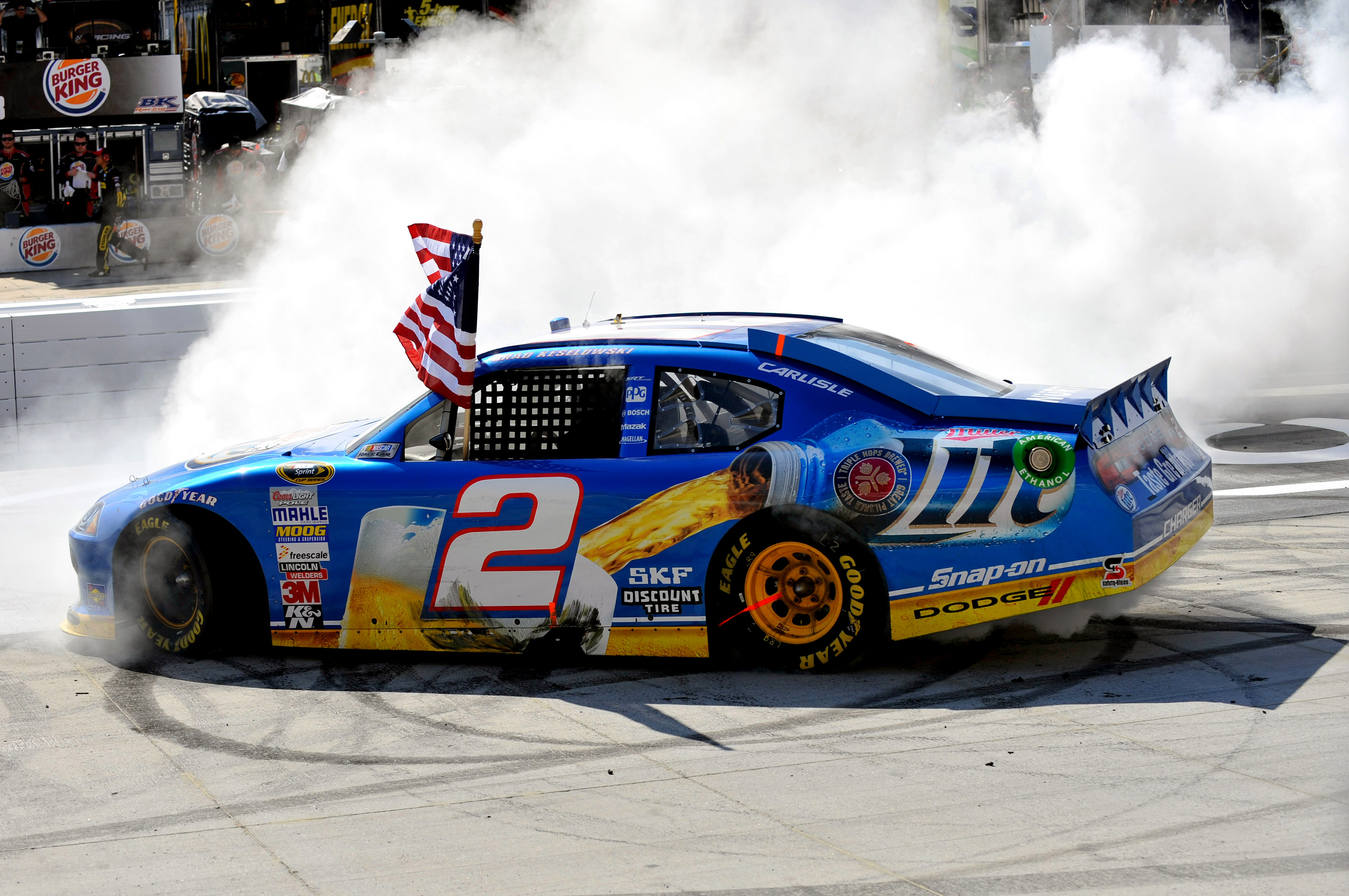
Brad Keselowski, No. 2 Miller Lite Dodge Charger, celebrates with a victory burnout after winning Sunday’s NASCAR Sprint Cup Series Food City 500 at Bristol Motor Speedway.
“We’ve spent an intense five months working to identify and evaluate all options for our future involvement in NASCAR,” Gilles said. “A number of opportunities emerged, and our team worked diligently to put a structure together to fit our overall business and competitive objectives. While we have been pleased and enthused with the amount of interest from teams and sponsors over that time, in the end, we simply couldn’t develop the right structure.”
Dodge has recorded 215 wins in the Sprint Cup Series, including 55 since 2001, and has been represented in the NASCAR Chase for the Sprint Cup seven of the eight seasons. In 2010, Brad Keselowski captured the NASCAR Nationwide Series championship in a Dodge from Penske Racing.
“It’s an extremely difficult decision to know that we won’t be there for our fans next season,” Gilles added. “It’s important to note that we have not lost focus on 2012 or the commitment to our partnership with Penske Racing in both the Sprint Cup Series and Nationwide Series this season.”
Brad Keselowski currently is seventh in the Sprint Cup Series standings and has three wins in his quest to make the 12-driver Chase field for the second consecutive year. In Nationwide Series competition, Sam Hornish Jr. is locked in a four-way battle for the season championship.
If there is a lesson to this story, it is that persistence can pay off -- even if it takes 42 years.
That's how long it took for Bob Russell of Southlake, Texas, to track down his stolen 1967 Austin-Healey 3000. The Dallas Morning News reports that it had been stolen from a Philadelphia apartment complex.
Now he has it back after finding it in a listing on eBay. He had been scouring the online auction site and eyeing every Austin-Healey he saw on the road.
Things were looking pretty grim for Russell, 66, a retired sales manager, when it came to the search until he got his big break. That came when he found the car listed for sale online, being sold in California by a dealer called the Beverly Hills Car Club. Even then, getting the car back wasn't easy.
Russell didn't have the stolen-car report from 1970. But he did have the key and a copy of the car title. Detectives were unable to help him at first because they couldn't find the report, either. But it was located after it was determined that a digit was off when the report was entered into the computer system.
Eventually the issues were settled, and Russell came to California to claim it. How much is it worth, besides sentimental value? The last bid on eBay was $19,700.
The 2010 Toyota Prius; one of 15 Used Car Best Bets.
It’s not been a great year for usedcar buyers. Prices have been soaring because of inventory shortages – in large part because with fewer new cars sold during the recession there are now fewer new cars entering the “previously owned” vehicle market.
The good news is that inventories are once again rising – which means used car prices are beginning to fall, according to a new report by the Black Book, a used car pricing and tracking service. In the meantime, vehicle quality is reaching an all-time, something true for both used cars and new.
So, the question is which are the best used car to buy? The folks at Edmunds, an automotive data tracking and testing service, have compiled a list of 15 best bets. This isn’t just a beauty contest. The selections were based on criteria including reliability, safety, value and, yes, availability. It wouldn’t help to pick a product consumers can’t find. The list was limited to vehicles now between two and seven years old.
The list includes a total of 11 different brands, but four marques appear twice, Ford, Honda, Hyundai and Toyota. (Nissan is there twice, as well, if you include both the Nissan and Infiniti brands). The editors’ picks:
How much you’ll pay varies widely, not just on the age but also the condition of the vehicles listed here. Costs vary widely by region, and equipment levels play a major role, of course. Even vehicle color can be influential. Black cars tend to be hard to sell in Phoenix or Miami this time of year. All-wheel-drive models can command a premium in the Snowbelt when winter arrives.
But the big bubble in used car pricing may finally be at an end.
“Almost a million more used vehicles will be added to the industry this year as a result of more trade-ins on new-car sales,” said Ricky Beggs, auto analyst at Black Book USA. “This is a significant driver of lower prices, combined with additional rental cars being sold at auction and dealers preparing for the coming 2013 models.”
With technological advances in the fields of in-car technology, as well as fuel efficiency, the list of features consumers might come to expect when in the market for a new car continues to grow. That said, it seems that an age-old concern is still at the front of car shoppers' minds.
According to a survey conducted by marketplace of in-process vehicle leases Swapalease.com, at the top of car-shopping consumers’ needs is still safety. In fact, more than 60 percent of Swapalease.com users chose safety as the most important consideration in choosing a new car, outranking style and appearance (30 percent), luxury and convenience (12 percent) and electronic features (9 percent), officials shared.
"Safety has long been high on the list for prospective car buyers or lessees, and our survey shows that changing times don't always change people's priorities," said Scot Hall, executive vice president of operations, of Swapalease, which is an online marketplace of in-process vehicle leases.
"Thanks to today's technology, we have an ever-growing list of features that make cars safer than ever before,” he continued.
And what safety features are consumers most concerned with?
Specifically, survey responders showed a particular interest in blind-spot warning systems, giving it 32 percent of the vote for most important safety elements.
Following close behind were hands-free calling and a back-up camera, the company added.
"It's interesting to note that people are so interested in the blind-spot warning system. It's the very latest in safety technology, and I know from personal experience that it's a wonderful feature," said Hall.
"It's also currently priced at a premium, so whether consumer will put their money where their opinions are remains to be seen,” he continued.
Next up, for those who chose electronics as a crucial element to consider when in the market for a new vehicle, a navigation system was of utmost concern, taking more than half the vote.
The company also noted that the majority of other technology features mentioned fell into the “entertainment category,” such as iPod/MP3 player compatibility.
Moving along, in the luxury and convenience category, heated/cooled seats were by far the most desired features, officials shared.
Memory settings for things like seat and steering wheel placement; rain-sensing windshield wipers, and a heated steering wheel, were also important to survey responders.
Lastly, upgraded interior trim and upgraded wheels took the top spots for style needs.
Statistically speaking, women are better drivers than men.
Famed composer Irving Berlin captured the battle between the sexes quite succinctly in his legendary song "I Can Do Anything Better Than You" from the 1946 Broadway musical "Annie Get Your Gun." Gunslingers Annie Oakley (Ethel Merman) and Frank Butler (Ray Middleton) lyrically debated who could shoot more accurately: she or he? But what they were really fighting about was which sex is the more capable: man or woman? That same argument has been waged many times, about many topics over the years. But no gender-related discussion has been more heated than the one that rages behind the wheel. So who are better drivers: men or women? The Answer Is ... In a study released by Quality Planning, an analytics company that validates policyholder information for auto insurers, women came out on top.
The study analyzed different kinds of vehicle code violations (traffic violations) and then compared how many times men were cited versus women. The conclusion was that men break more traffic laws and drive more dangerously than women. Because they violate laws designed to make the roads safer, men cause more accidents and expensive damage. Who do you think are better drivers: Men or Women?
"We were not surprised to see that men have slightly more violations — about 5 percent — that result in accidents than women," said Raj Bhat, president of Quality Planning. "And because men are also more likely to violate laws for speeding, passing and yielding, the resulting accidents caused by men lead to more expensive claims than those caused by women."
Topping the list is the finding that men are cited for reckless driving 3.41 more times than women. Reckless driving is considered one of the most serious traffic offenses by courts since it implies a disregard for the rights and safety of people or property. Violations for which men scored at least 50 percent higher than women:
TYPE OF VIOLATION
RATIO M:F
Reckless driving
3.41
DUI
3.09
Seatbelt violations
3.08
Speeding
1.75
Failure to yield
1.54
Stop sign/signal violation
1.53
Evidence Gets Worse Guys, when it rains it pours. According to the Insurance Institute for Highway Safety, more men than women die each year in motor vehicle crashes. "Men take more risks behind the wheel than women, and so men are more likely to get into serious crashes," says Anne McCartt, the institute's senior vice president of research. "We don't have any way of comparing their driving abilities, but on the likelihood of getting into a serious crash in which someone dies, men win handily."
Fatal passenger vehicle crash involvements per 100 million miles traveled, by driver age and gender, April2001–March 2002:
*Total includes other and/or unknowns On the Flip Side The Insurance Institute for Highway Safety also reported that from 1975 to 2003, female deaths in motor vehicle crashes increased 14 percent, compared with an 11 percent decline for male motorists during that same period. Insurance industry experts peg the rise in female deaths in vehicular crashes to more women obtaining driver's licenses than in the past and driving more miles than, say, 25 years ago.
Plus, it seems as if female motorists are getting more aggressive. "It's true that men do take more risks than women," says Carolyn Gorman, vice president of the Insurance Information Institute. "However, [women] are partaking in more risky behaviors than ever before. The gap is closing quickly." So Are Women Better Drivers Than Men? Many auto insurance industry experts would agree with the theory that men, especially young men, tend to drive more aggressively than women and display their aggression in a direct manner, rather than indirectly. Furthermore, as a rule of thumb, male drivers are more likely than women to break the law, and the male of the species tends to be more of a risk-taker.
Even so, it's hard to say women are better drivers, although they are statistically safer. Women have just as many accidents as men; however, they tend to be minor fender-benders. Men, on the other hand, tend to do the job properly when they crash, and as a result cost their insurance companies a lot more money.
So, even though it's a blow to our male egos, we'll have to give this round to women. Sorry fellas.
We've been waiting since the 2009 Tokyo Motor Show – when Mitsubishi first talked about the PX-MiEV, a plug-in CUV concept – for some sort of real-world plug-in Outlander. It looks like we're finally going to get our wish during the 2012 Paris Motor Show this fall. Today, Mitsubishi released the not-very-revealing teaser image you see above, and it says the plug-in Outlander will "share its architecture with the soon-to-be-introduced New Outlander's ICE versions." Mitsubishi also claims the Outlander will "be the first permanent 4WD electric car in series production."
The New Outlander PHEV will have three drive modes, all of which are 4WD: Pure (all-electric drive), Series (electric drive, supported by the gas generator) and Parallel (ICE engine supported by Twin Motor 4WD). Mitsubishi says the New Outlander PHEV will have a total driving range of 800 km (497 miles) and emit fewer than 50 grams of CO2 per kilometer.
As previously noted, the PHEV version of the Outlander should arrive in the spring of 2013. Given the coming pack of plug-in crossovers (see: Tesla Model X, Volvo V60 plug-in hybrid, Ford C-MAX Energi plug-in hybrid and Amp's offerings), if Mitsubishi can get the cost comparatively low, the way the i is compared to the Nissan Leaf, without making it quite as spartan, this thing could carve out a niche for itself. For the moment, though, it sounds like Mitsubishi is only going to sell the new Outlander PHEV in Europe.
*UPDATE: As DaveMart points out in the comments on AutoblogGreen, Mitsubishi reps have told Inside Line that the plug-in Outlander will come to the U.S. in late 2013 or early 2014.
MITSUBISHI MOTORS AT 2012 PARIS MOTORSHOW - NEW OUTLANDER PLUG-IN HYBRID EV WORLD PREMIERE
CIRENCESTER, UK - At the forthcoming 2012 Paris Motor Show[1] ("Mondial de l'Automobile"), Mitsubishi Motors will continue to roll out its ambitious, global and green new product generation with a series of significant premieres. Highlight of this offensive will be the world introduction of the all-new Outlander Plug-in Hybrid EV.
New Frontier
Neither a mere adaptation of an existing Internal Combustion Engine (ICE) – powered vehicle, nor a dedicated Plug-in Hybrid technology showcase, the New Outlander Plug-in Hybrid EV (or "PHEV") will share its architecture with the soon-to-be-introduced New Outlander's ICE versions – an engineering feat in itself.
As such, it will be the first mainstream car from a major manufacturer envisaged from the outset with built-in provisions for either ICE or PHEV power trains.
Plug-in Hybrid EV
Adding to its credentials, the New Outlander PHEV will further distinguish itself:
Mitsubishi Motors' first Plug-in Hybrid car, it will be an EV-based vehicle, relying on MMC's extensive EV and electronic know-how, supplemented by a petrol engine when needed – a solution more suited to global markets than Diesel.
Making the best use of Mitsubishi's renowned 4-Wheel-Drive expertise, it will also be the first permanent 4WD electric car in series production.
Long haul
The New Outlander PHEV unique drive train combination of front electric motor + rear electric motor + front traction/generator petrol engine will translate into a choice of three driving modes:
Pure (Twin Motor 4WD EV)
Series (Twin Motor 4WD - EV supported by generator)
Parallel (ICE engine supported by Twin Motor 4WD).
When fitted to the New Outlander, the Mitsubishi Plug-in Hybrid system will allow for a long haul range and very low emissions similar to that of the Concept PX-MiEV II show car, i.e. a driving distance of over 800 km and a CO2 target below 50 g/km.
Further...
Whilst the New Outlander ICE will start its commercial career in Western & Eastern Europe in the fall of 2012, the Outlander Plug-in Hybrid EV will be retailed in Europe during the course of 2013.
Complementing this New Outlander family, Mitsubishi Motors will stage further premieres at the Paris Motor Show, aimed at a European audience and to be detailed at a later stage...
A Mix of High Mileage Cars as Well as Budget, Crossover, Eco-Friendly and Large Family Vehicles Make the List SANTA MONICA, Calif. — Parents and Edmunds.com, the leading online resource for car buyers, today revealed their list of the Best Family Cars for 2012. For the fifth consecutive year, car experts from both organizations scrutinized hundreds of vehicles focusing on safety and reliability as top priorities. Each car was also judged on performance, interior, exterior and family-friendly features. Every car on the list is equipped with antilock brakes, electronic stability control and a minimum of six air bags. Plus, a record 14 vehicles recommended by Parents/Edmunds.com earned a “Top Safety Pick” designation from the Insurance Institute for Highway Safety (IIHS).
In addition to test-driving, analyzing, and comparing prices and features, Parents and Edmunds.com consulted parents who own and drive these vehicles every day. The Best Family Cars of 2012 feature appears in the July issue of Parents magazine on newsstands June 12th.
According to Parents and Edmunds.com, the 15 Best Family Cars of 2012 (and their MSRPs) are:
To read more about the 15 Best Family Cars featured in the magazine, go to: http://www.parents.com/parenting/money/car-buying/best-family-cars-2012/. About Parents: Parents, published monthly by Meredith Corporation, has been America’s #1 family magazine for more than 85 years. Since its inception in 1926, it has been a trusted source by every generation of parents. Currently, the magazine is a powerful community of nearly 16 million readers devoted to supporting the efforts of parents, educators and other citizens who strive to make the world a better place for our children. Parents can be found online at http://www.parents.com/. About Edmunds.com, Inc. (http://www.edmunds.com/about/)
Edmunds.com, the premier online resource for automotive information, launched in 1995 as the first automotive information Web site. Its acclaimed mobile site, Edmunds.com Android App and five-star Edmunds iPhone and iPad apps make car pricing and other research tools available for car shoppers at dealerships and on the go. Its automotive enthusiast web site, InsideLine.com, is the most-read car publication of its kind. Its highly regarded mobile site and iPhone app features the wireless Web’s most comprehensive gallery of automotive photos and videos. Edmunds.com Inc. is headquartered in Santa Monica, California, and maintains a satellite office in suburban Detroit. Follow Edmunds.com on http://www.twitter.com/edmunds and fan Edmunds.com on Facebook.
According to consumer research discussed at the Telematics Detroit 2012 Conference, social media platforms such as Facebook and twitter are among the lowest priorities when it comes to in-car connectivity features consumers want in their vehicles.
Rather, vehicle shoppers are interested in “specific applications that make sense when they’re driving,” according to Thilo Koslowoski a noted technology analyst for consultancy firm Gartner.
Such “specific” apps include real-time weather forecasting, traffic conditions and parking availability. According to Koslowoski, the research by Gartner demonstrates that “you have to be careful not to confuse the car with your mobile phone or your laptop.”
The findings might come as news to some automakers, who seem increasingly obsessed about integrating vehicles as much as possible to consumer’s lifestyles, including making them rolling conveyances that allow motorists to stay connected via social media. In fact, Mercedes-Benz offers something mBrace2, which allows the driver to post to their Facebook page, albeit only via voice activation, while on the move. “We believe that telematics will allow people to be both connected and protected at the same time,” declared Sascha Simon. head of M-B USA’s advanced product planning division.
Koslowski, believes that in the future, while “scores of apps can be created,” the emphasis is going to be on those that are “driver specific.”
According to the Gartner research, when it comes to in-vehicle connectivity, around 82 percent of motorists are willing to pay extra for services if they’re deemed useful, such as OnStar, navigation systems, or other safety features; that’s a sizeable jump from just 20 percent in the US a few years ago. He also says that some of the current players in the telematics game will likely not survive in the future.
“I just think some companies will not be in a position to be successful on that on their own, it will require too much of an investment,” Koslowski said during the Detroit conference.
 Another awesome announcement from the Google I/O Developers Conference yesterday was the ability to attach and send money via Gmail using Google Wallet.